


How to Qualify for Boston

Updated: May 3

If you want to qualify for Boston, your 16-week training plan is probably the least important factor in your success.

Most runners are focused on that training plan, the goal pace, the long runs, building volume. Those things matter, but they're not the most important pieces.
Qualifying for Boston is one of the most common performance goals among runners for many reasons, partly because it's achievable for a wide variety of people.
While it's certainly not possible for everyone, you also don't need to be an elite or sub-elite athlete, or have rare genetic gifts. And, thanks to its age-graded qualifying times, you can qualify at nearly any age!
This article is about the decisions and factors most runners never think about — and the ones that are holding them back. Are you doing all you can to reach your dreams?
The Training Plan Trap
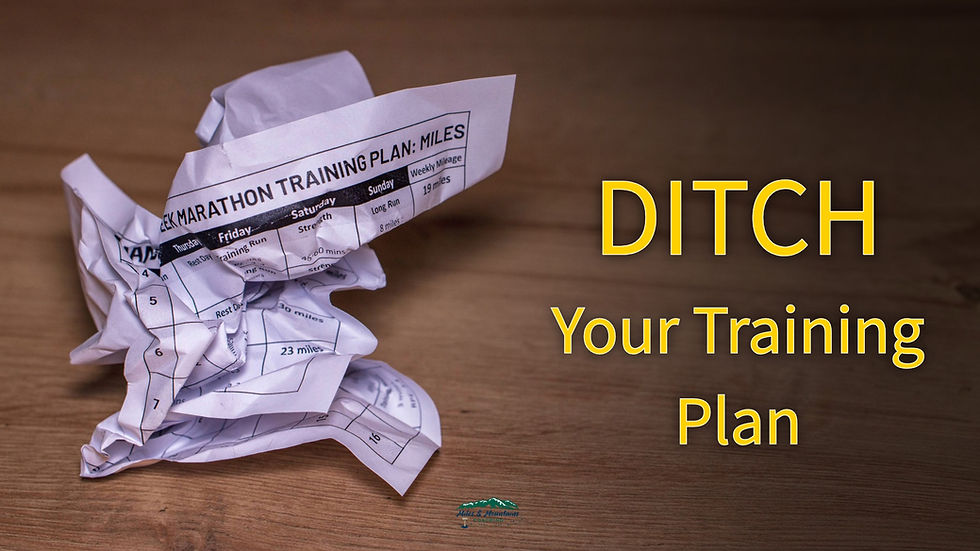
Training plans aren't as effective as you probably think they are. There are several reasons, and you can read more in the full article linked below.
Backwards Design Isn't Effective Training
Training plans are built from your goal date (and sometimes goal time) backward, but that's not how training works. To be effective, training has to start from where you are today, not where you wish you were.
Training is Non-Linear
Progress and building fitness isn't a straight line, and plans that treat it like it is will either break you down, or leave a lot of fitness on the table. Bumping long runs up 2 miles until you get to the magical 20mi number... that's just not how it works.
Training Has to be Adaptive
A plan decided weeks or months in advance can't account for illness, stress, life or how your body actually responds to training. If the plan falls apart when you have a stressful work week, illness or family emergency, it's not helping you improve.
Training Needs to be Specific to You
A plan calibrated for another athlete — even adjusted for pace — produces a fundamentally different stimulus for your body. Doing 800m or 1k repeats as speedwork because someone else does might be the wrong choice to help you improve.

I wrote an in-depth article about the Problem with Training Plans, and it's worth your time if you're serious about a goal like qualifying for Boston.
Fitness Grows In Years, Not Cycles
True fitness growth doesn't happen in a single 20-week training cycle. Period. It happens through many consecutive years.
Training shouldn't be a switch you flip on or off — it's momentum you build month to month, season to season, year to year. The more you look at any stretch of time as a chance to train with purpose to move your fitness forward, the more progress you’ll make.
Running is running. Specificity is important, but if you constantly prioritize specific training over long-term fitness growth, you’ll never reach your full potential as an athlete. Regardless of what race is next on your schedule, you can (and should!) always be working on improving all aspects of your fitness through consistent, science-based training.
If you’re constantly jumping from one marathon block to the next, you may be missing out on huge opportunities for long-term fitness growth.
It's crucial to spend real time developing other aspects of your fitness. Taking eight months or even a year off from marathons to truly chase 5k to 10k fitness might be the best thing you can do for your progress in the marathon!
Speed work at shorter distances develops running economy — your body's efficiency at a given pace — through neuromuscular adaptations that marathon training alone simply doesn't stress. A more economical stride means less effort at marathon pace, which translates directly to faster times and better endurance late in the race.
Look at professional marathoners: almost none started out running marathons exclusively. Most began as track or cross-country runners, then gradually moved up in distance. Many still dedicate full seasons to shorter races to improve their efficiency and speed before returning to the marathon.
There are plenty of reasons for this, but the takeaway is simple: if you keep doing the same thing, you’ll eventually max out your body’s ability to adapt to that stress. Just doing 'more' isn't enough to keep progressing.
Instead, train intelligently and with variety across multiple years. When you do, you’ll likely discover potential far beyond what you thought possible!
The Off-Season is The Progress Season
Most runners treat the off-season as a break from training. In reality, it's one of the most valuable windows you have.
Recovery is important — if you've raced hard, intentional downtime is part of the process. But there's a difference between purposeful recovery and going dormant — or running aimlessly — until the next training cycle starts. That's where progress stalls.
World-class runners have already built almost all of the fitness they'll ever have. Their training is focused on sharpening that fitness for specific events. But many recreational runners, even after years of training, still have enormous untapped capacity — the kind only developed through consistent, purposeful training across multiple years.
Elite runners aren't fit because of their training. They train the way they do because they're already fit. Most of us still have plenty of room to truly level-up our fitness.
Most athletes expect adaptations to happen much faster than they do. But meaningful adaptations show up on a 4–6 week delay and sometimes much longer. That interval workout last week hasn't made you fitter and faster this week. What you feel today is actually the sum of what you did a month ago.
When you only train with intent during a 16–20 week window, you're forever hauling your fitness up to what the plan demands. You cram in volume, race, recover, lose momentum, and start again from roughly the same place. Instead of compounding your adaptations and making long-term growth, you just keep treading water.
I go much deeper on this in the full article below, and if you aren't training with purpose 48+ weeks a year, it just might be the biggest change you can make!

I highly recommend reading more about this in my article Avoid the Off-Season Trap!
Train the Fitness You Have
Physiologically speaking, your body doesn’t care about pace or distance. Effective training is based on time and effort, not miles and speed.
This means a workout prescribed in miles and pace represents something completely different depending on who is running it. A 3hr marathoner and a 4hr marathoner doing the same 800 repeats are doing two entirely different workouts, getting entirely different adaptations. And neither are really helping their speed.
You can’t take a plan designed for one athlete, plug it into an equation to reduce the volume and speed, and expect it to work properly. But time? A 2min interval is a 2min interval, no matter who is running it.
This applies to how you execute workouts too. Chase a pace, and you're either undertraining or digging a hole.
Instead, training by time and effort is self-calibrating. On a hot day, at altitude, on tired legs or on a hilly route, your effort stays right where it needs to be to elicit the right stimulus.
If this is new to you, my article on speedwork below, and my piece on why pace is the wrong metric are both worth your time.

Learn more about what makes speedwork effective in the article Are Your Intervals Actually Effective?
What the Long Game Actually Looks Like
Like any effective training, long-term structure will look different depending on your athletic history, current strengths and weaknesses, and your long-term goals. I don’t mean your next race. I mean the runner you want to be five years from now.
Let's dig into an example—though keep in mind that there are a variety of ways this can be done!
Case Study
A 40-year-old runner has been doing one to two marathons per year for the past eight years. Their PR is 3:39, from a few years ago, and they've come within a few minutes of that at most of their recent races.
Each race has been preceded by a 16–20 week marathon-specific plan. During those blocks, they've generally peaked at 50–60 miles per week, had regular race-prep long runs, and done plenty of threshold work, marathon-pace efforts, Yasso 800s, and mile repeats. Sometimes they’ll race a half marathon during the build-up, and they almost always run the local Turkey Trot with their family. After the race, they shut things down for a while and run sporadically, waiting for the next training plan to start.
Sound familiar? I guarantee you know runners like this—maybe you are this runner.
So how do we help this athlete level up their fitness? At 40, there’s still plenty of time to build, adapt, and grow as an athlete.
What's missing is focused development in speed and running economy. As we covered earlier, mile repeats and Yasso 800s aren't speedwork for this athlete — they're aerobic strength work. The ceiling isn't getting raised.
The fix isn't complicated, but it takes patience. A block or two focused on shorter distances like 5Ks and 10Ks would be helpful. That means true speed development: strides, short intervals, VO₂max efforts. Intensity goes up, but mileage doesn't necessarily need to follow right away. When you raise that speed and running economy ceiling, everything underneath it improves.
From there, perhaps they'd build the capacity to handle more volume. By training adaptively without a race deadline looming, you can nudge weekly volume up gradually over months, letting your connective tissue and aerobic system adapt together. The goal is to start the next marathon block already handling a higher volume comfortably instead of grinding up to it.
Then, move back up through various distances, getting race practice at efforts near lactate threshold, and dialing in gear, fueling, and logistics along the way. Racing somewhat frequently — particularly in the 10mi to 25km range — is valuable marathon prep.
Every phase builds fitness that carries forward and compounds with future training, all of it supporting their marathon goals.
Give Yourself Multiple Opportunities
A Boston qualifier usually doesn't happen because you picked the right race, trained perfectly and peaked at the right time. It happens because you've built a body that's capable of it — and then you gave it enough chances to prove that.
This means racing frequently. Not just marathons, and not just when you feel ready. 5Ks, 10Ks, half marathons, the local Turkey Trot — all of it counts. Shorter races sharpen your speed, help you dial in your sense of pacing and effort, and give you low-stakes opportunities to practice racing. They also tell you things about your fitness that training alone never will.
The key is resisting the urge to treat every race as a fitness benchmark or capstone on a project. Not every race needs a goal pace, a PR attempt, or a perfectly executed plan. Some races should just be chances to explore: to see what your body does when you push earlier than feels safe, or hold back and negative split, or show up and run hard without a watch dictating the effort. That kind of experimentation is how you learn to truly race to your fitness level.
It's also how breakthroughs happen.
Sometimes your fitness is far stronger than you think, and the only way to find out is to take a real risk on a day that feels right. That's mentally easier in a shorter race.
I'll be writing more about the art of the breakthrough soon — subscribe so you don't miss it! The short version is this: the runners who qualify for Boston aren't always the ones with the best fitness. They're often the ones who were willing to explore their fitness consistently, so that on the right day, they were ready.
Select the Right Races to Qualify for Boston
Even once you've adopted the long-term training outlook discussed above, at some point, you need to pick a race. Race selection is a variable most runners underestimate — and it's one you can control!
There are some things worth thinking about before you enter those credit card details:
Size Matters
Big-city marathons can be incredible experiences, but the logistics — early corrals, long waits, crowded courses, chaotic pre-race routines — work against you on race day. Smaller races (roughly 1,000–4,000 runners) give you a calmer morning, a cleaner course, and a better chance of recreating the conditions you trained in. I've written more about this here.
Pick the Right Time of Year
There are a lot of considerations here. Obviously it's best to choose a race with reliably-decent weather conditions. Don't try to make this perfect though — consistently slightly warm beats inconsistently perfect! Other factors include when you can easily get time off work, cost of travel and perhaps most importantly, the timing of peak training and how that works for your life.
Flat or Downhill Doesn't Mean Faster or Easier
"Flat and fast" and "net downhill" courses are marketed as the easy path to a PR or BQ. In fact, data shows that extreme net-downhill courses produce slower average finishing times than well-designed flat or rolling courses.
These courses also often require more specific training and carry higher injury risk than well-designed rolling courses. For most runners, lightly rolling terrain is usually the sweet spot: enough variety to protect your biomechanics, fast enough to run a great time.
Learn more on course selection, and specifically on net-downhill races.
The Best Race is One You're Excited About
That matters more than people admit. Racing a course that generally excites you — beyond the prospect of a fast time — changes how you approach the buildup and race day. The training feels more purposeful, the taper less agonizing, and the start line less intimidating. Most importantly, it gives you something to focus on during the race beyond your effort — the course, the scenery, the atmosphere.
Believe In Yourself
A lot of people hold themselves back with preconceived notions about their limits. The reality is, very few people have truly committed to the process for long enough to find those limits.
Qualifying for Boston isn't a 16-week project. It's the byproduct of a long-term commitment to training with purpose, racing with curiosity, and trusting that your fitness is building — even when it doesn't feel like it yet.
Most runners who eventually qualify look back and realize the breakthrough didn't come from the perfect training block or the perfect race. It came from staying in the game long enough for adaptations to stack and everything to come together on the right day.
With a long-term outlook, consistently purposeful training, smart racing choices, a little luck, and a lot of self-belief — you just might get there!

Whether you're chasing a BQ, want to smash your first 100mi, or snag that 5k PR, you need a coach who actually coaches—not someone just handing you a plan based on race date and pace.
Custom, adaptive coaching works better than any pre-written plan—because it’s built around you, in real time!
An all-in coach has helped hundreds of runners improve their training, stay consistent, find balance, and go farther than they thought possible.
Are you next? Learn more here!

Comments